The Evolution of Computer Hardware: From Past to Present
The evolution of computer hardware has been a fascinating journey, transforming the way we interact with technology. From the early mechanical devices to today’s powerful processors and compact designs, the progression of hardware has paved the way for innovations that have reshaped industries and everyday life. Understanding this evolution not only provides insight into current technology but also hints at what the future may hold.
The Early Days: Mechanical Devices and Mainframes
In the late 19th and early 20th centuries, the concept of computing began with mechanical devices like the abacus and Charles Babbage’s Analytical Engine. Though not computers in the modern sense, these early inventions laid the groundwork for future developments. The mid-20th century saw the rise of mainframe computers, which were massive, expensive machines used primarily by governments and large corporations. These early computers used vacuum tubes for processing and were limited in functionality but opened doors to automated computation.
The transition from vacuum tubes to transistors in the 1950s marked a significant milestone. Transistors were smaller, more reliable, and energy-efficient, which enabled the development of smaller and more powerful machines. This innovation led to the creation of second-generation computers that were more accessible and began to find their way into educational institutions and businesses.
The Microprocessor Revolution
The introduction of the microprocessor in the 1970s was a game-changer. A microprocessor is a compact integrated circuit that contains the functions of a central processing unit (CPU) on a single chip. This innovation allowed for the creation of personal computers (PCs), making computing accessible to the general public. Companies like Intel and AMD emerged as leaders in microprocessor technology, driving advancements that would fuel the PC revolution.
As microprocessors became more sophisticated, the concept of home computing took off. In the late 1970s and early 1980s, computers like the Apple II and IBM PC entered the market, sparking a technological boom. These early personal computers featured basic input/output systems, floppy disk drives, and rudimentary graphical interfaces, paving the way for the user-friendly systems we use today.
Advancements in Storage Technology
Storage technology has also evolved significantly since the early days of computing. Initially, magnetic tape was the primary medium for data storage, but it was slow and cumbersome. The introduction of floppy disks provided a more portable solution, enabling users to transfer data more easily. However, it was the hard disk drive (HDD) that revolutionized storage, offering much larger capacities and faster access times.
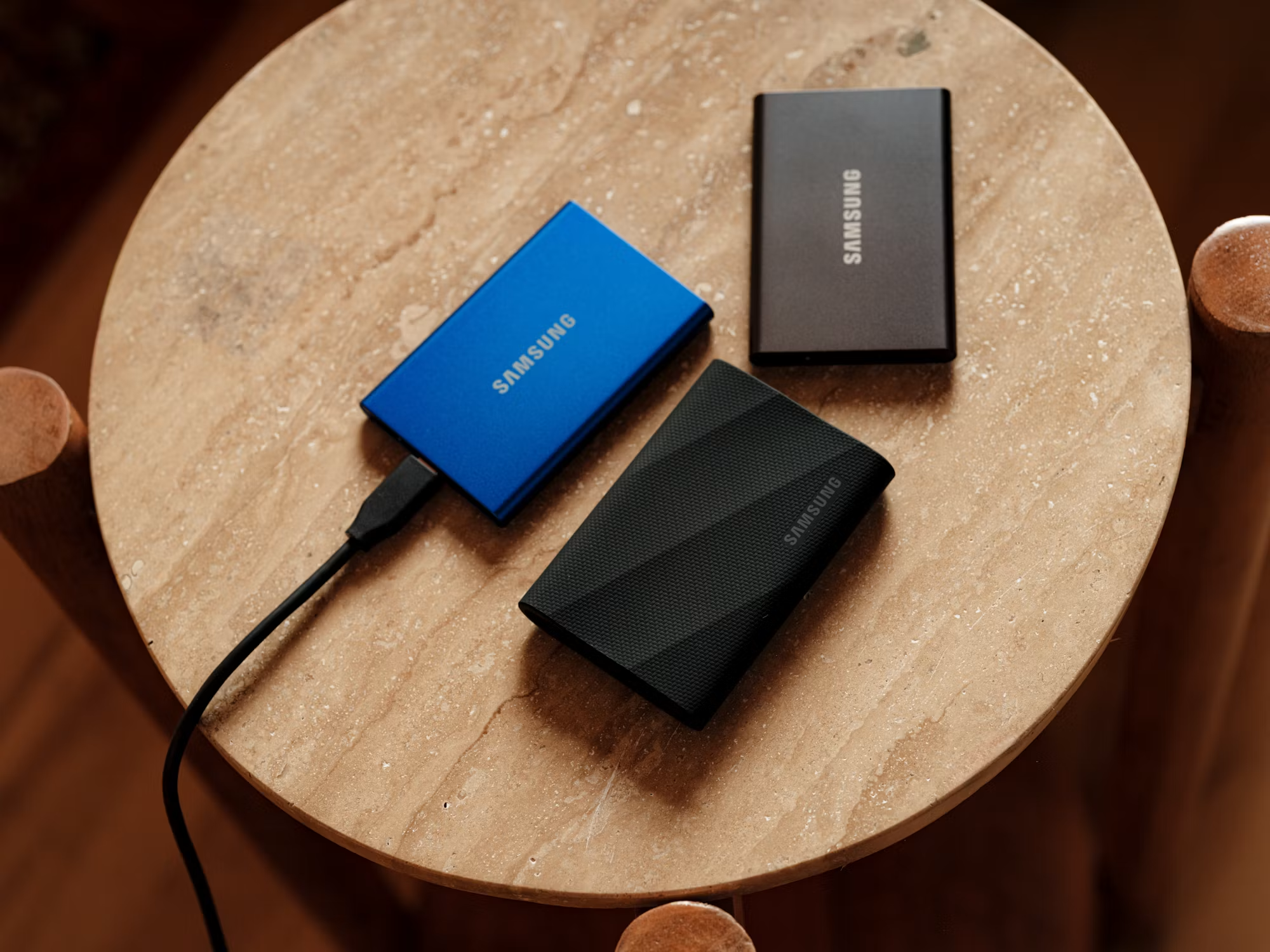
In recent years, Solid-State Drives (SSDs) have gained popularity due to their speed and reliability. Unlike traditional HDDs, which use spinning disks to read and write data, SSDs utilize flash memory, allowing for faster boot times and improved overall system performance. As SSD prices continue to decrease, they have become the preferred storage solution for many consumers and professionals.
The Role of RAM in Performance
Random Access Memory (RAM) is another critical component in the evolution of computer hardware. Initially, computers relied on magnetic core memory, which was bulky and limited in capacity. With the advent of semiconductor technology, RAM evolved to become smaller, faster, and more efficient.
Modern computers typically use Dynamic RAM (DRAM), which allows for rapid data access and improved multitasking capabilities. As software applications have become more demanding, the need for higher RAM capacities has surged, leading to innovations in memory technology. Today, systems with 16 GB or more of RAM are common, enabling users to run multiple applications simultaneously without experiencing slowdowns.
Graphics Processing: Beyond the CPU
As computing needs evolved, so did the demand for enhanced graphics performance. Early computers relied solely on the CPU for graphics rendering, which limited their ability to handle complex visual tasks. The development of dedicated Graphics Processing Units (GPUs) changed this landscape dramatically.
GPUs are specialized hardware designed to accelerate the rendering of images and videos, making them essential for gaming, design, and multimedia applications. With the rise of esports and high-definition content, GPUs have become a focal point of innovation in the tech industry. Companies like NVIDIA and AMD continue to push the boundaries of graphics technology, enabling immersive experiences that were once unimaginable.
Networking and Connectivity Advances
The growth of the internet has also played a significant role in the evolution of computer hardware. Early networking methods were limited to direct connections between devices, but advancements in networking technology have allowed for wireless communication and global connectivity. Routers, switches, and modems have become essential components of modern computer systems, enabling seamless access to the internet and local networks.
Wireless technology has transformed the way we connect, with Wi-Fi and Bluetooth becoming standard features in devices ranging from laptops to smartphones. The advent of 5G technology promises even faster connectivity, opening up new possibilities for mobile computing and IoT (Internet of Things) devices.
The Rise of Mobile Devices
The explosion of mobile devices has shifted the focus of hardware development from traditional PCs to smartphones and tablets. These devices have integrated powerful processors, high-resolution displays, and advanced sensors into compact designs. The demand for portability has driven innovation in battery technology, enabling longer usage times without compromising performance.
Smartphones today are equipped with multi-core processors that rival traditional PCs in terms of computing power. They also incorporate advanced features such as facial recognition, augmented reality capabilities, and high-quality cameras, blurring the lines between mobile and desktop computing.
Future Trends in Computer Hardware
As we look to the future, several trends are poised to shape the next generation of computer hardware. Quantum computing, for instance, holds the potential to revolutionize the way we process information by leveraging the principles of quantum mechanics. While still in its infancy, this technology could enable unparalleled computational power, solving complex problems that are currently beyond our reach.
Additionally, the integration of artificial intelligence (AI) into hardware design is becoming increasingly prevalent. AI-driven components can optimize performance, enhance energy efficiency, and improve user experiences by learning from individual behaviors.
Conclusion
The evolution of computer hardware has been marked by groundbreaking innovations that have transformed technology as we know it. From the early mechanical devices to today’s powerful processors and mobile devices, each advancement has contributed to a more interconnected and efficient world. Understanding this evolution is crucial for anyone interested in technology, as it provides context for the current landscape and insights into future developments. As we continue to push the boundaries of what’s possible, the journey of computer hardware will undoubtedly remain an exciting and pivotal part of our technological narrative.